Adaptors, Converters, Transformers (Oh My…)
Why are the plugs and outlets in Israel different?
Electrical plugs and outlets are different in different countries simply because the electricity is different in different countries, and no one want to set their home on fire by using the wrong electricity to heat their morning coffee or do their daily tasks.
In Israel, the electricity is 230 volt and 50 Hertz. In the US, Canada, it is 120 Volt 60 Hertz. Even though everyone says 220 volt and 110 volt (and forget Hertz).
The Outlets (and plugs) which are used in Israel are:
Official Standard Type H:
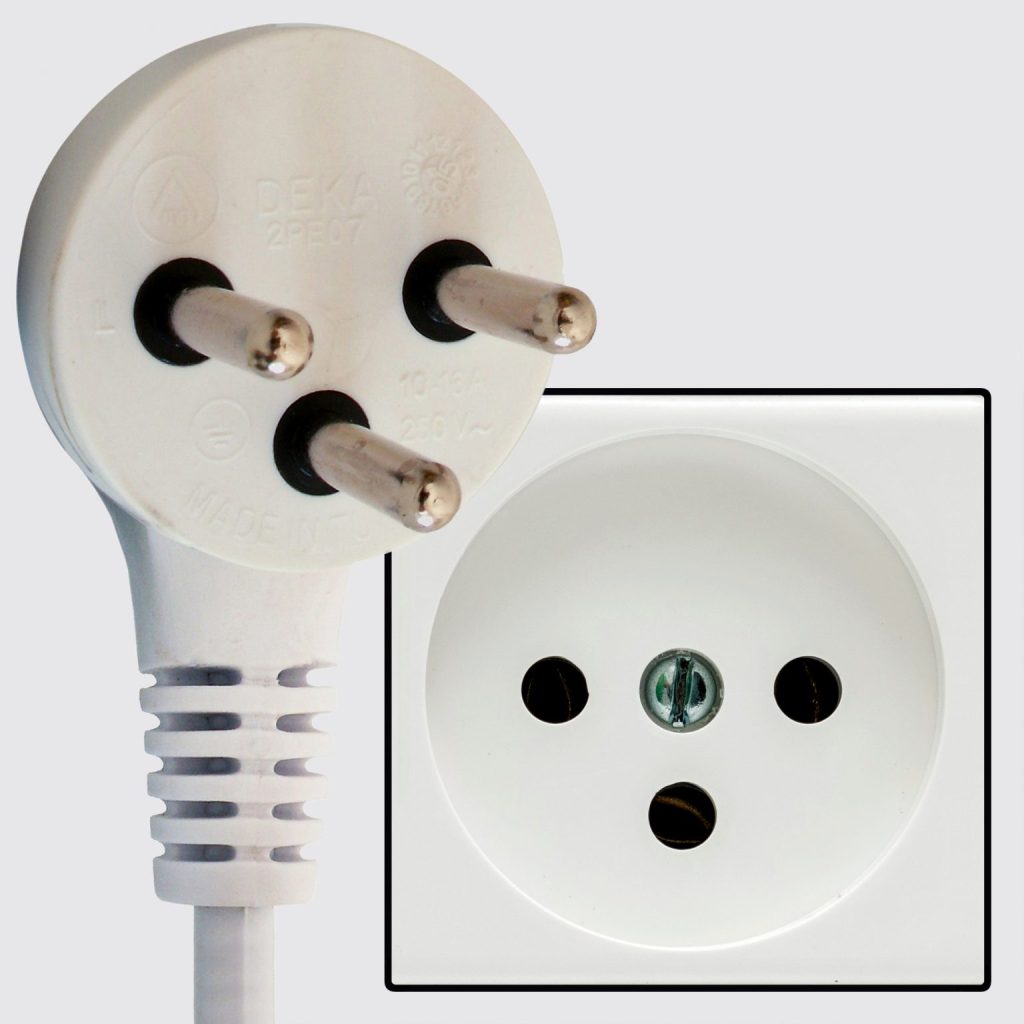
Type C (Illegal to install a Type C outlet – there is no ground connection):

Old Type H Hybrid (out of use since 1989)

If you home or apartment has any type C or type H Hybrid outlets, change them to the current type H. If you have to ask how, hire an electrician. An electrician should be able to change one in about 5 minutes, so it would be a minimum charge (150-300 Shekels for an hour or less).
My Plug Doesn’t Fit the Outlet – What Do I Do?
Do not force a plug into an outlet!
Do not use a simple adapter unless you know the device can take the voltage!
- Check the “input” of the device you want to plug in.
- Based on the electrical input of the device determine if you need an adapter (or new power cord), a converter, a transformer, or a new device.
How to Determine what You Need (Check the Input).
When in doubt, ask the manufacturer or a professional!
The first thing is to check what type of electricity your device can take. This is called “input”.
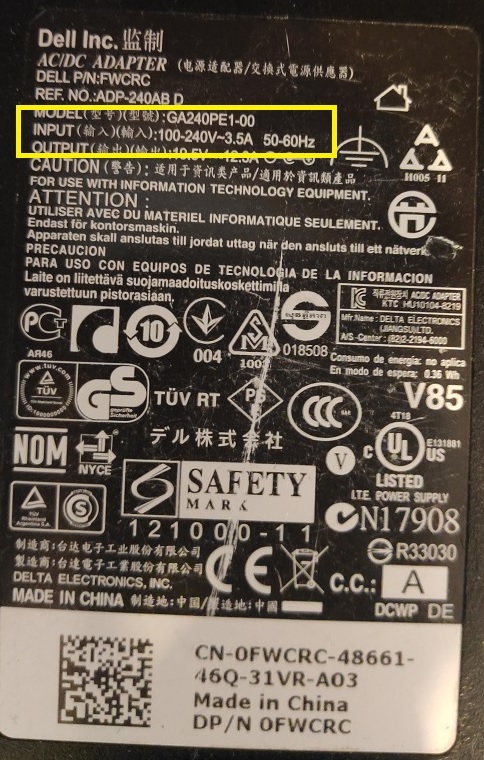
To check the input of the device, find the sticker with all of the technical information. The input will show a number or range for voltage and a number or range for Hertz (Hz). Israel is 230 volt 50 HZ, so those numbers must be in the ranges.
In this below example, we see that my laptop can take electricity that is anywhere from 100 to 240 volts (so 230 works) and anywhere from 50-60 Hertz (so 60 is fine). All I need is a simple adapter, or I can buy a replacement power cord (which I did).
If your device does not show 230 volt or 60 Hertz in the range, and you want the device to last, you must get a transformer.
The transformer does not change the Hertz. This may have an effect on your device, especially if it uses the Hertz to keep time or to rotate parts.
Adaptor:
An adaptor is a simple plug – you plug your decide into one side and the adaptor fits into the outlet. It does not change the electricity. It does not protect you from anything. It is the easiest way to set something on fire. It looks like this:
Converter:
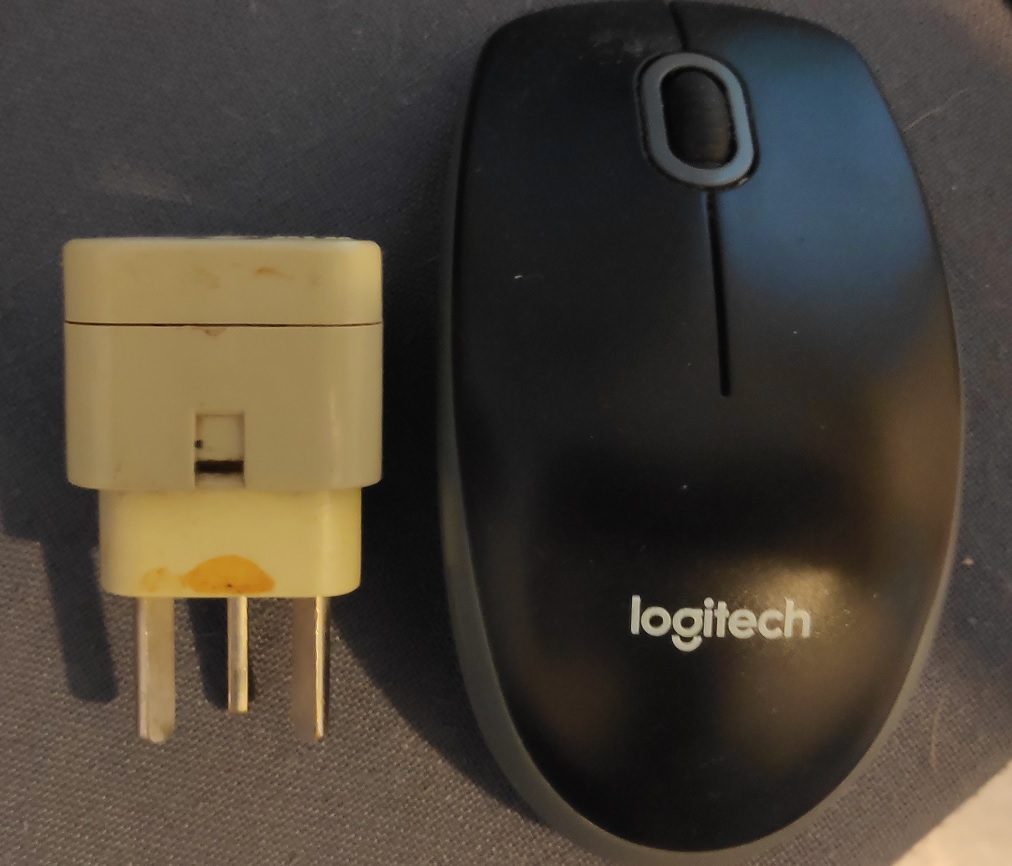
A converter actually does change the electricity – sort of. It’s good for short uses for small devices, like a razor on a trip overseas. It’s not good for long term use on expensive or large devices.
These run $10-$50 and are about the size of a mouse:
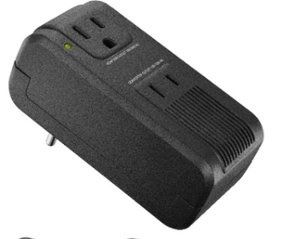
I bought three of these when I made Aliya, specifically for my 110 volt mini stereo. The first on was dead when I landed. The next one lasted about 6 months, and the third one lasted about 15 years until the mini stereo died. I think the third one was the exception to the rule and if it wasn’t a cheap mini stereo I wouldn’t have risked it.
If you want the technical difference between a converter and a transformer, the converter cuts the electrical sine wave, the transformer actually changes it.
Transformer:
This is the real deal. This is what you see on the electrical wires which bring the electricity into your home and when one blows the whole neighborhood has no power until the electric company sends the techs to fix it. Fortunately, you don’t need one that big.
The transformer actually changes the voltage of the electricity.
Transformers use electricity as long as they are plugged in, even if there is no device attached to them!
These are about the size of two bricks, weight about the same, and good ones run from $150-$400 (delivered to Israel).
Generally speaking, you need one that can handle double the wattage of what you want to run on it.

When does it make sense to bring old appliances and run them on a transformer?
It makes sense to me for no one to bring old appliances, and everyone to buy new ones here in Israel, from Ed and Sons Electric LTD. But you aren’t me.
Remember that electricity and language aren’t the only differences between Israel and North America. Appliances which run on gas, use water, or receive signals (TV or Radio) all have their own considerations, and will be discussed in future articles. However, if the only concern is electricity, here is my suggestion.
As a general rule:
If you have very good quality small appliances which do not heat things, and you expect to last five years or more, it makes sense to buy a good transformer, pay a handyman to put it someplace where it won’t get wet and can be easily unplugged when not in use; and bring your small appliances.
Keep in mind that shipping takes time, so items you ship won’t be available during transit.
Note that the local service and warranty providers here in Israel are often times not obligated to honor warranties on products purchased overseas, even on new goods.
 EASE Shipping to Israel (Ed and Sons Electric)